 Whatsapp
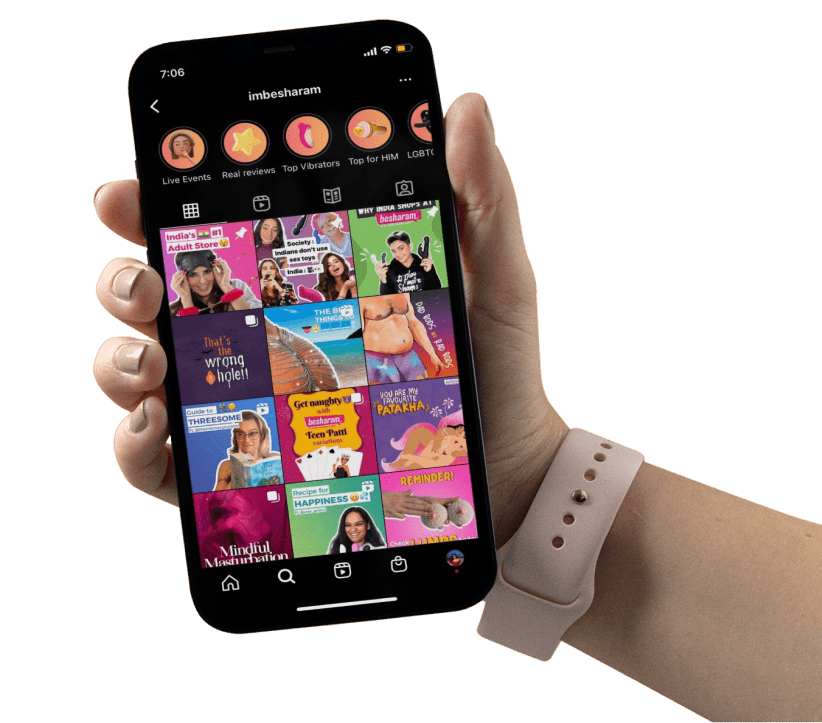
In a country where conversations around sex and pleasure still largely stay behind closed doors, one Indian homegrown brand is putting hard numbers to a fast growing but underserved category. On a recent episode of the Raj Shamani podcast, IMBesharam co-founder Raj Armani discussed about India’s sex toy market , based on current adoption trends and consumer spending patterns.
From 2,000 Toys A Year To 1.8 Lakh – And Beyond
When we launched IMBesharam in 2013, there was effectively no organised adult retail in India. No proper adult stores, no mainstream brands, and definitely no polite way to say “I want to buy a vibrator” without someone panicking. In our very first year, even with Sunny Leone as the face of the brand, we sold around 2,000 toys in total. The bigger job back then was not marketing. It was discovery and education. We had to answer the “is this safe”, “is this legal”, “what if someone finds out” questions long before we could talk about functions or features.
Culturally, the idea of owning a vibrator, masturbator or butt plug was almost unthinkable for many Indian families. Those early years felt less like running an ecommerce store and more like running a secret helpline for sexual wellness. But slowly, conversation by conversation, that started to shift.
Things changed dramatically during the Covid period. With people locked indoors, dealing with stress, uncertainty and isolation, sexual wellness and pleasure moved closer to the centre of personal wellbeing. Intimacy, release and connection stopped being “nice to have” and started feeling like survival tools. In that environment, pleasure products stopped being just “naughty extras” and started becoming part of how people coped and cared for themselves.
During some of those phases, demand for pleasure products on IMBesharam surged between 70 and 120 per cent compared to earlier months or the previous year. Women in particular stepped forward more than ever – not just as silent recipients of products but as informed buyers, asking questions, reading reviews and taking charge of their own pleasure.
By 2021, we were selling about 1,80,000 toys a year. In 2025, we crossed that figure by October alone. That is not just a sales milestone for us. It is a strong sign that what was once a fringe, whispered category is slowly but surely moving into the Indian mainstream.

Global Normal, Local Catch-Up
On the podcast, we placed India’s reality next to what we already see in Western markets. In the United States, multiple surveys suggest that roughly 60 per cent of adults have used sex toys and nearly half own at least one. Across parts of Europe, more than 60 per cent of people say they own a sex toy, and when you ask if they have used it, the question almost sounds silly to them.
In those markets, vibrators, butt plugs, Fleshlights, masturbators and couples’ sex toys are treated like any other personal care or lifestyle product. They sit in the same mental basket as skincare, grooming or wellness. You might buy a face serum and a vibrator in the same session without overthinking it.
India, on the other hand, is where beauty and fashion ecommerce were many years ago. We are early. We are under penetrated. But we are moving fast. As stigma drops, payment options widen, content becomes more relatable and delivery becomes more discreet, we expect pleasure to follow a very similar curve to categories like beauty, fashion, footwear and smartphones. First a small group of bold early adopters, then a much larger group of everyday Indians who just want practical, reliable ways to feel good.
The Math Behind A $4 Billion Opportunity

Whenever we share our estimates for India’s potential, we see the same reaction: shocked eyes, raised eyebrows, a small pause and then more questions. So we prefer to lay out the math very clearly.
India’s population is around 1.4 billion. Out of that, approximately 800 million people use the internet. If we filter further for adults who are online, urban or semi urban and have disposable income, we arrive at a total addressable market for pleasure products somewhere between 250 and 300 million people.
India’s overall ecommerce market, across all categories, is currently around $60 billion a year. On our store today, the average order value sits near ₹8,500. But we know that as this category goes beyond early adopters and starts reaching the true mass market, it needs more accessible price points. That is why we expect the long term average order value for sex toys in India to stabilise between ₹3,500 and ₹4,000, which works out to roughly $35 to $45 per order depending on exchange rates.
Now comes the key assumption. If we take that 250 to 300 million adult TAM and assume that only around 40 per cent of them choose to buy a pleasure product once in a year, we land at about 125 million customers annually. Multiply that by a conservative $40 AOV and you get a projected market of around five billion dollars.
We deliberately call this a four billion dollar opportunity, because we want to stay on the lower, more cautious side of the estimate. This model does not even fully account for people who buy more than once a year, couples who experiment with multiple toys, or users who slowly build a collection over time. It is simply a clean way to show that even modest adoption, in a country this large, creates a very serious market.
Look at it another way. At current levels, that four billion dollar figure would represent roughly seven per cent of India’s total ecommerce spending. When you compare that to what Indians already spend online on food deliveries, fashion, electronics and travel, it stops looking wild and starts looking inevitable.
Who Is Actually Buying?

Because we sit at the intersection of payment data, browsing behaviour and customer support, we have a fairly unique view of who is actually shopping and why.
Yes, payment data and shipping labels often show a higher percentage of male names. In many Indian households, the card, the UPI account or the delivery name still defaults to the man. But when we look inside the orders, we see a more complex story. Many baskets from male accounts are built around products clearly intended for female pleasure, like vibrators, suction toys, bullet massagers and couples’ sex toys. The name on the card may be male, but the focus of the order is her pleasure.
We also see a strong and growing group of women who buy directly for themselves. A significant share of these customers are in the 35 to 44 age group. These are women who have spent years prioritising family, work and responsibilities, and are now comfortable investing in their own bodies and desires. They gravitate towards clitoral vibrators, discreet travel friendly devices and toys that do not scream “sex toy” at first glance.
On the men’s side, there is steady demand for masturbators, strokers, Fleshlights and penis pumps. Many of these buyers are looking for something more satisfying and body friendly than just scrolling through porn. They want texture, sensation and control without shame.
Another interesting pattern from our internal data is that while singles often place the first order, couples frequently become the most engaged repeat customers. Once a toy enters the bedroom and both partners experience how much it can add to intimacy, communication and fun, they tend to come back and explore different categories and sensations together.
Shame In Public, Curiosity In Private
India’s relationship with sexual content and sexual wellness has always been complicated. On the surface, social norms remain traditional and conservative. Obscenity laws are vague and outdated. Payment gateways, ad networks and marketplaces often take a very cautious stance toward adult products, sometimes stricter than the law itself.
This is why brands like ours started using softer terms such as “massagers” or “personal wellness devices” and designed toys that could pass off as lipsticks, skincare tools or everyday objects. It was never about tricking customers. It was about finding language and shapes that could co exist with Indian family dynamics and privacy needs.
At the same time, actual behaviour tells a very different story. Search trends, browsing patterns and order data reveal a huge amount of curiosity around pleasure products, kink and sexual wellness, not just in metros but also in smaller cities and towns.
In our experience, India’s problem is not desire. It is privacy. People do not want to make a public announcement that they bought a dildo or a masturbator. They just want the comfort of knowing it will arrive in a plain package, with a neutral description, from a brand that will protect their details and never judge them. That is why discreet packaging, neutral order labels and strong data protection are not add ons for us. They are non negotiable.
Still Under 5% Penetration – And Just Getting Started
Even with the growth we have seen, we estimate that less than five per cent of India’s online capable population has actually used a sex toy so far. That means we are still at the very beginning of this journey. If adoption climbs to ten or twenty per cent over the next five to ten years, the market size can grow far beyond today’s projections.
Technology will only accelerate this. App connected toys for long distance couples, VR compatible masturbators, toys that sync to music, content or partner inputs – these are already part of everyday life in many Western markets. As devices become more affordable and internet access becomes even more universal, it is only a matter of time before Indian users start integrating these into their own relationships and routines, in uniquely Indian ways.
Cultural and professional validation will help too. We are already seeing more influencers, comedians and creators mention sex toys on mainstream platforms without flinching. More therapists and sex educators are open to recommending vibrators for women facing low desire, pain or anxiety around intimacy. Every honest conversation like this chips away at the shame that has kept our desires underground for generations.
From Niche To Normal
For us at IMBesharam, this is bigger than a business story. It is a mindset story. For too long, Indians were taught that sexual pleasure is dirty, sinful, or at best something you never speak about. But the human body does not obey shame. Pleasure is wired into our anatomy and our brain. Just because someone has not used a sex toy yet does not mean they never will. In our experience, once people experience a safe, consent based, shame free version of pleasure, they rarely want to go back to silence and suppression.
Whether the Indian sex toy market hits four billion dollars exactly when our models predict or a little earlier or later is almost a side detail. What matters is that sexual pleasure is slowly moving from taboo to category. From a secret drawer topic to a legitimate part of health, wellness and ecommerce.
In a nation of 1.4 billion people, that shift is not just about numbers. It is about millions of individuals quietly deciding that their pleasure matters too. And we are proud, a little bemused and very excited to be one of the brands helping India make that journey from niche to normal